
Progressive reflections on the lectionary #107
Matthew 21:1-11 - Palm Sunday in Matthew
In Matthew’s version of the ‘triumphal entry’ to Jerusalem, we get the enacted fulfilment of prophecy - the writer offers a slightly tweaked version of the story that appears in each of the gospels, he does this to present Jesus as the true Israelite Messiah, the opposite, in other words, to the leadership on offer from the temple, the palace, or the fortress. I will refer back to my readings of the story in Mark and Luke, and highlight how Matthew writes differently, and explain what I think his intent was.
It’s been a while since I was on a protest march, but reading the accounts of Jesus’ triumphal entry into Jerusalem always takes me straight back there. The crowds, the chanting, the camaraderie - the (generally faint) whiff of danger.
I’ve previously written about other versions of the triumphal entry. When I wrote up a quick look at the story in Mark I noted how it was bracketed by two other triumphal entries - that of Simon Maccabeus, and that of Menahem - both of which have somewhat faded from popular memory, but are important to help us see what was going on. When I wrote about the story in Luke I explained what the reference to ‘the rocks’ really means - and it’s not all that subtle.
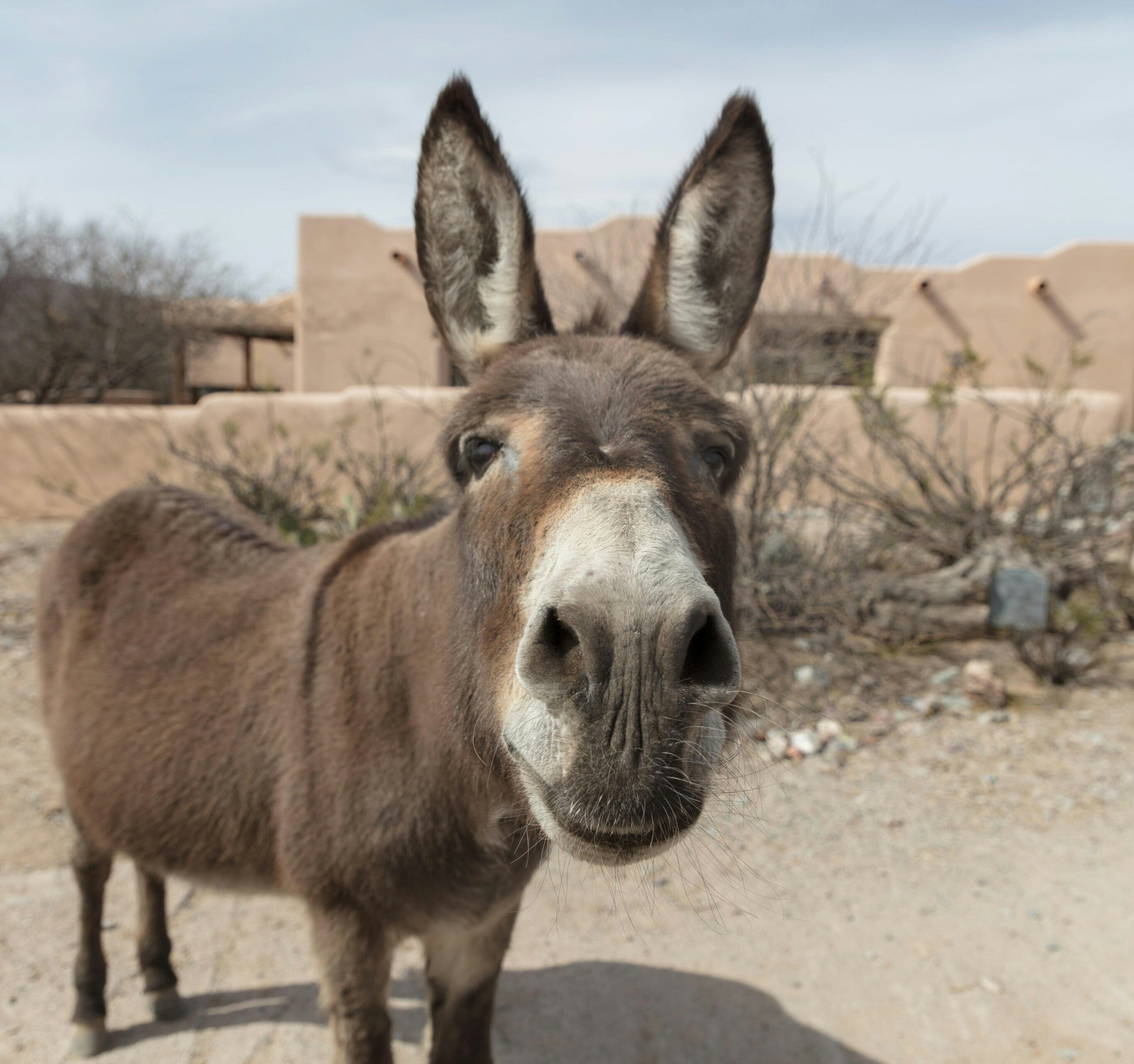
Matthew has some of the same details - for instance he has the same ‘password’ being exchanged between Jesus’ followers in order to get the all important donkey (ironically, probably only the second famous donkey in the Jesus story, even though the most famous one is very much deuterocanonical. (I thought that maybe I’d written something, here, about the protoevangelium of James - sadly it must have been somewhere else. It’s a good yarn though and worth a read, particularly if you’re ever keen to find out where some of the ‘extra bits’ of our Christmas story come from.)
But Matthew doesn’t stop with a donkey, he has the disciples find both a donkey and a colt - so that Jesus can, rather improbably, ride them both.
As usual, though, the probability of things is not of ultimate concern, what Matthew wants to do above all is demonstrate that Jesus ‘enacts’, or perhaps we might prefer to say ‘performs’ a piece of prophecy.
Rejoice greatly, O daughter Zion!
Shout aloud, O daughter Jerusalem!
See, your king comes to you;
triumphant and victorious is he,
humble and riding on a donkey,
on a colt, the foal of a donkey.Zechariah 9: 9
He takes this, of course, a little too literally - somewhat muddying the water for us, but it’s no great issue - the point is made, the details trowelled on with a bit of editorial or narrative flourish. This is not just any old procession, we are to understand, this is the arrival of the Messiah on his anti-war horse.
The general consensus is that Matthew, like Luke, adapts Mark as a source text - he uses Mark’s rather skeletal prose as a template, and then embellishes it with some helpful detail, like an extra animal.
The key message that Mark wants to communicate though, remains the same for Matthew - this is a Messianic procession, a counter imperial procession, a parody of the sort of procession, full of pomp, circumstance, and overt demonstration of power, which was taking place around the same time on the other side of the city.
In Matthew’s version of the story we get a repeat of the ‘alternative’ kingship model where humility is of greater value than pride; a highly telegraphed fulfilment of scripture thing - Matthew doesn’t want anyone to be in any doubt about that; and a clear depiction of the clash between the will of the people, and the intent of the elite.
The last of these three is important, Matthew has Jesus enter a city in turmoil, and go not to the palace, but to the people. It’s the deliberate echo of the Maccabean arrival in Jerusalem of almost two centuries earlier - an event of enormous significance to an oppressed people, but one which scarcely registers in the Christian imagination, regrettably.
The Messianic aspect of this is further highlighted by Matthew’s addition of a key phrase: “Hosanna to the Son of David!” The crowd call out - the ‘Son of David’ phrasing is uniquely Matthean, and is distinctive in its importance. This is a ratcheting up of the call for liberation that Hosanna signifies - adding a political title to the call, and presenting a challenge to authorities that situate themselves as ‘rightful’.
The word ‘hosanna’ has lost some of it’s currency, I think, thanks to contemporary worship songs (using ‘contemporary’ somewhat broadly here). There’s nothing quite like listening to a half full church of genteel British Christians trilling ‘sing hosanna, sing hosanna, sing hosanna to the king-of-kings…’ to dull the edge of what was a very edgy chant indeed. Effectively it is supposed to be a protest chant, a desperate call for liberation from oppression. “Davidic liberator, save us now!” The crowd are yelling.
They might as well continue with: “Let’s go to the temple - let’s march on the fortress - let’s rid ourselves of these oppressors once and for all!” I’ll grant you, that doesn’t work all that well as a protest chant. There’s a reason nobody ever put me in chant of anything like that.
The key is to recognise that this is not the easy to digest ‘spiritual’ language we like to make out, it’s loud, it’s public, it’s disruptive. And in Matthew we also get the unique idea that not only was there a noisy crowd, but in fact “the whole city was in turmoil” (v. 10).
It’s not some sort of polite, or appropriate parade with smiling people joyfully throwing their arms up in the air - it is a genuine disturbance, we’re only a step or two away from a riot here.
Matthew has some of the people asking: who is this guy? And they are answered, in verse 11, that he is “the prophet from Nazareth in Galilee,” that deserves a little unpacking too - Jesus is ‘the prophet’ which is to say he represents the prophetic tradition of Israel, the radical reforming stream within Hebrew thought. And he’s from Nazareth in Galilee, he’s from a marginal place, a place well known for its rebels and political troublemakers.
He is the opposite, in other words, to the temple elite who represent the priestly identity (they are the corrupt corpse we learn about in the Lazarus story). He’s also the opposite to the imperial soldiers with their war horses and weapons, and he’s the opposite to the Herodian dynasty - Jesus, Matthew tells us, represents a powerful repudiation of all of this. Here, at last, is a genuine alternative.
Progressive Reflections On the Lectionary are intended to be useful to people who preach, or are interested in why on earth anyone still reads the Bible.