
Progressive reflections on the lectionary #96
Matthew 3:13-17 What does it mean to be the 'son of God'?

This year I am choosing to focus on ‘hope’ which means that, as far as possible, I shall be looking for ways to perceive a message of hope in each of the texts I read. In this week’s passage, we have the story of Jesus being baptised by John. I will explain why I think Jesus was baptised and say that among the causes for hope found in this passage, there is the idea that God experiences our suffering (God is not ‘impassable’) and will dwell on the political idea that the ‘son of God’ is not an emperor, but an ordinary person. It is the political perspective that explains the symbol of the dove, which is the opposite to the imperial eagle.
There are only two ‘sacraments’ in the sort of church tradition I am part of - baptism and communion. These two acts are profoundly symbolic, we can talk about communion another time - but this text, Matthew’s story of Jesus’ baptism, affords us an opportunity to explore what is important about the idea of baptism in the first place.
Since I first came across it, I’ve been impressed by Alan Streett’s readings of these rituals - he argues that in the first‑century world, baptism functioned as a politically subversive act - a sacramentum, or oath of allegiance, in which a person publicly renounced the authority of Caesar and pledged loyalty to Jesus and God’s kingdom instead. It was, he says, a sign of belonging to another king, or another empire.
baptism functioned as a politically subversive act
This means that rather than a private spiritual ritual, baptism signified non‑violent resistance to imperial power and the formation of an alternative community shaped by Christ’s reign. For me, this explains why Jesus would be baptised. Otherwise - what would be the point? Baptism as an oath of allegiance makes all the sense to me.
This year my focus is on ‘hope’ - so far as possible I’m going to look for signs of hope in the passages I read from the Bible. I can identify at least two distinctly hopeful aspects of this story - firstly there is the idea that God is with us - in the hard things of life. The classical idea of the remote deity, untouched by human experiences, unchanged by our hurts and frustrations, is not the God of the Hebrew scriptures - nor is it, I think, the God of the New Testament either. Here we have the radical idea of the divine embodied in a man who suffers and dies.
I think that’s a profoundly encouraging idea - that God is not at a remove from us, but is moved by the same things that move us - is changed by our experiences. In a sense that makes it all the more important that Jesus was, in the best sense, ordinary.
The great thing about Jesus’ baptism story in Matthew is that it underlines this idea. Here Jesus is not simply going through a ritual of personal repentance, rather he is publicly aligning himself with a renewal movement to which other ‘ordinary’ people already belong. God’s presence is not to be found ‘somewhere else’ - at a remove from us, but right here - on the river bank. God is not far from us, but right here with us.
Crucial to a ‘good’ reading of this text is a basic understanding of the symbols being employed, I think. We already have the symbol of the washing - a counter oath of allegiance, there are other symbols too. Matthew has two distinct ‘supernatural’ (read: ‘symbolic’) elements in his story, the second of the two is the voice which says: “This is my Son, the Beloved….” I want to be clear that this is a political claim as much as it is a religious or metaphysical one.
In the ancient world, “son of God” was a political title - Alexander the Great claimed to be the ‘son of Zeus’ - and the roman emperors Augustus, Tiberius, Nero and Domitian were all, also, given the title ‘Divi Filius’ (son of a god) - divinity was political. Here Matthew takes the title that would be given to Caesar, and gives it to a Galilean peasant.
“son of God” was a political title
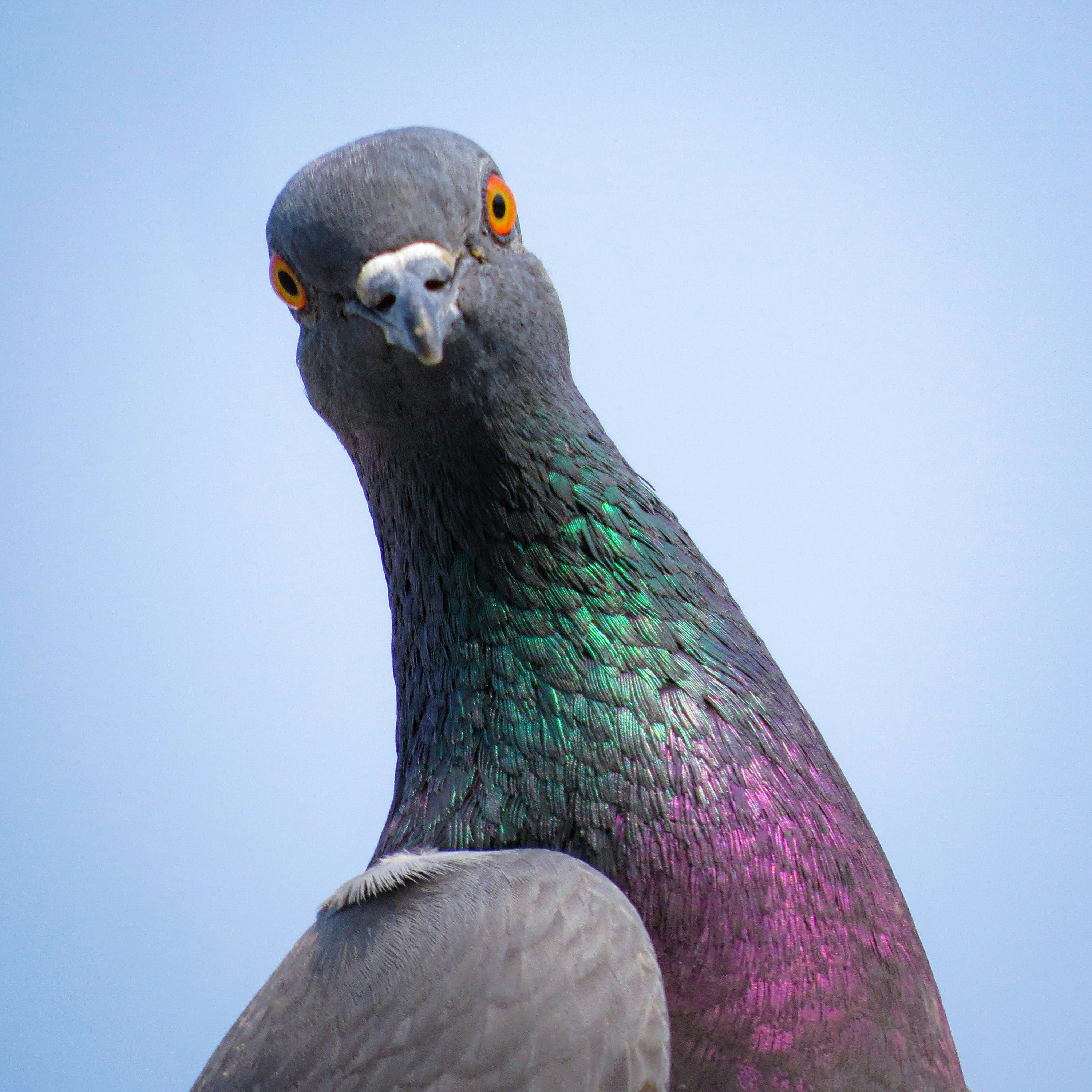
The same reversal happens with the symbol of the dove. A dove (read also: a pigeon - the words are indistinguishable - it means a common bird) represents the opposite to the imperial eagle. (I was tickled to read, recently, an article which said pigeons are ‘working class’ - “You can tell pigeons are working class because every pigeon looks knackered.”) Rather than some great symbol of power and authority you have the symbol of normality, of the common person.
This brings me to the second way in which I find hope in this passage, because I find this reversal profoundly hopeful, particularly in an era where, once again, imperial power is being wielded, and leaders are demanding a religious, or quasi religious form of fealty. God is not invested, Matthew says, in the great leaders of the world, the warriors, the wealthy - the people of the eagle. Instead divine favour rests on the common people, the pigeon people: the peasants and workers - the unseen, unimportant, and the ordinary.
Do let me know your thoughts on this passage. At the end of the week I’ll post a recording of the sermon that I give about this - you’ll see that it draws on the ideas here - but you can also help me shape the way that I interpret the story. Thanks in advance.
Progressive Reflections On the Lectionary are intended to be useful to people who preach, or are interested in why on earth anyone still reads the Bible.
Thanks again, Simon - you never fail to stretch our imaginations and send our brain cells scuttling down lots of little side alleys!
Rather like that dreadful bird song about a partridge, French hens, calling birds etc,, we seem to be on some kind of avian trip, so I thought I'd just throw in a seagull called Jonathan Livingston who suggests that we aim to find out what we already know!
looking forward to the sermon...
Thanks Simon. Fresh insights to start the year. And I’ll try to look at the pigeons in my garden differently (after which I’ll move on to the magpies - although I’m not making any promises)